
COMPLETE DCS SOLUTION
1.Conceptual Design & Project Definition
This initial phase involves defining the system requirements and establishing the control philosophy.
Process Analysis: Review of Process Piping and Instrumentation Diagrams (P&IDs) and Control Narratives to understand the control needs.
I/O List Generation: Creating a comprehensive list of all Analog Input (AI), Analog Output (AO), Digital Input (DI), and Digital Output (DO) points.
System Architecture & Sizing: Determining the number of operator stations (OWS), engineering stations (EWS), controllers, and communication networks.
Redundancy Requirements: Defining the need for redundant CPUs, power supplies, communication buses, and I/O modules for critical loops.
2. Front-End Engineering Design (FEED)
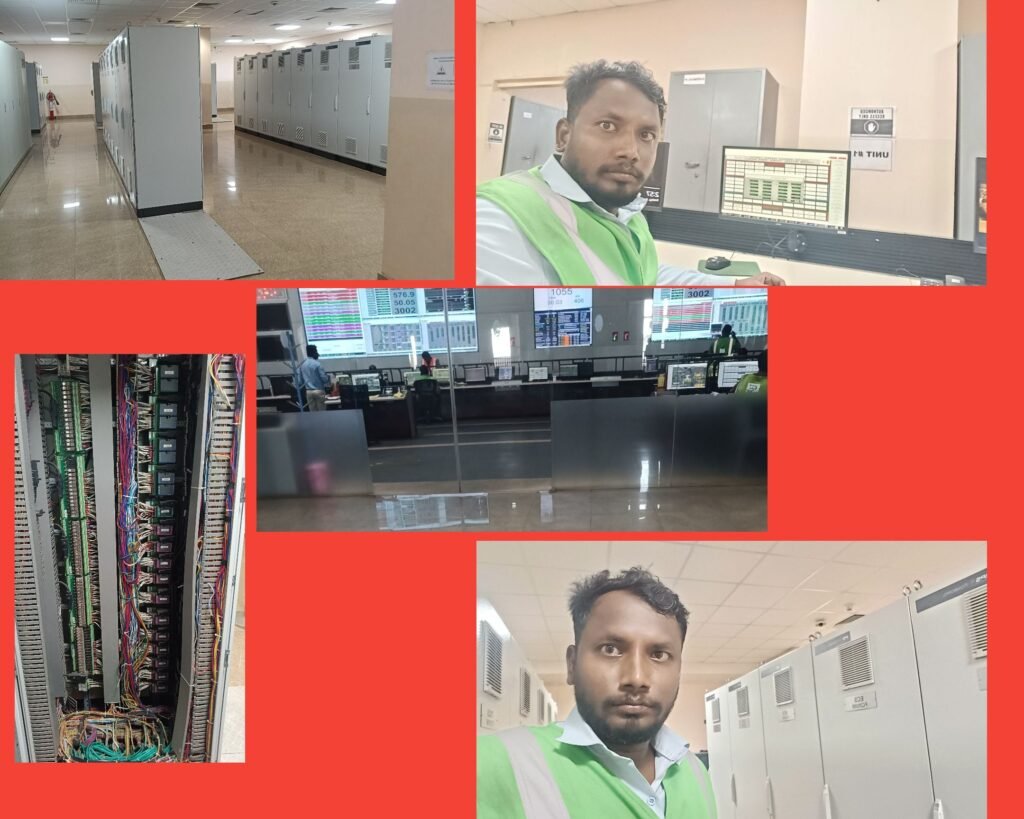
System Layout: Designing the control room layout, including marshalling cabinets and operator consoles.
Control Strategy Development: Creating logic diagrams, sequence diagrams, and interlock/cause-and-effect diagrams.
Communication Protocols: Selecting communication standards (e.g., Profibus, Foundation Fieldbus, Modbus) for interaction with smart instruments and third-party systems.
3. Detailed Design & Engineering
Hardware Design: Developing General Arrangement (GA) drawings for panels, power distribution, earthing diagrams, and Bill of Materials (BOM).
Software Configuration: Configuring the DCS database, developing graphics (HMI design), and creating control logic in the EWS.
Cable Termination Schedule: Preparing detailed wiring connections from field devices to Marshalling cabinets.
4. Factory Acceptance Test (FAT)
System Assembly: The vendor assembles the cabinets, loads software, and configures networks.
Function Testing: Testing logic, graphics, and hardware in a simulated environment to ensure compliance with design specifications.
Punch List: Identifying and resolving issues before shipping the system to the plant site.
5. Site Installation & Commissioning
Installation: Physical installation of cabinets, console furniture, and cabling.
Pre-Commissioning Checks: Powering on, earthing checks, and hardware redundancy verification.
Loop Checking: Cold loop checks (wiring continuity) followed by hot loop checks (field device interaction).
System Start-up: Testing closed-loop control (PID tuning), interlocks, and sequence logic under actual process conditions.
6. Final Documentation & Handover
As-Built Documents: Updating all drawings, I/O lists, and software logic to reflect the final installation.
Training & Handover: Training operators and maintenance personnel on system operation and troubleshooting.